Inside the Galleass: The Warship That Crushed the Ottoman Fleet at Lepanto 1571 (Full Process)
Step inside a 16th-century Venetian Arsenal and discover how a single hybrid warship — combining the rowing power of an ancient galley with the heavy broadside cannons of a modern galleon — crushed the Ottoman fleet at the Battle of Lepanto on October 7, 1571, ending Ottoman naval dominance in the Mediterranean and saving Christian Europe from further Ottoman expansion in one of the bloodiest naval battles in human history. This full-process historical documentary explores the engineering and battlefield impact of the Venetian galleass — a revolutionary hybrid warship developed at the Venice Arsenal in the late 15th century. Built using seasoned oak and pine hulls, three masts rigged with lateen and square sails, thirty to thirty-eight oars on each side worked by five to eight free Venetian citizens, a heavily armed forecastle and sterncastle, and broadsides mounting thirty to fifty bronze cannons, the galleass combined the maneuverability of the galley with the firepower of the galleon. At Lepanto, six of these monsters changed the course of European history. Explore every major stage of Venetian galleass construction and the Battle of Lepanto, including: Selecting and seasoning oak timbers from Venetian-controlled Dalmatian forests Building the hybrid hull at the industrial Venice Arsenal using standardized parts Stepping three masts and rigging them with lateen and square sails Mounting thirty to fifty bronze cannons across forecastle, broadside, and stern Installing thirty-eight oars per side worked by free Venetian citizen rowers Stationing six galleasses in advance of the Christian battle line at Lepanto Opening the battle with devastating cannonades into Ottoman galley charges The Battle of Lepanto was the largest naval engagement in the Mediterranean since classical antiquity. On October 7, 1571, the Holy League — a coalition of Spain, Venice, the Papal States, Genoa, Savoy, Tuscany, and the Knights of Malta organized by Pope Pius V — met the Ottoman fleet in the Gulf of Patras off the coast of Greece. The Christian fleet was commanded by Don Juan de Austria, the twenty-four-year-old illegitimate son of Holy Roman Emperor Charles V. The Ottoman fleet was commanded by Müezzinzade Ali Pasha, the Kapudan Pasha of the Ottoman navy. The Christian fleet numbered approximately 206 galleys and six Venetian galleasses, plus smaller support vessels. The Ottoman fleet numbered approximately 230 galleys. By every traditional measure of Mediterranean naval warfare, the Ottomans should have won — they had more ships, more experienced crews, and the advantage of momentum from decades of expansion. But six Venetian galleasses, stationed in advance of the Christian line, opened the battle with massed cannonades that broke the Ottoman galley charge before it could close to ramming range. Ottoman galleys, with only one or two forward-facing bow guns each, could not match the broadside firepower of the galleass. Within hours, the Ottoman fleet was shattered. By nightfall, approximately 30,000 to 40,000 Ottoman sailors and soldiers were dead, 8,000 were captured, and over 200 Ottoman ships had been sunk or taken. Christian casualties were roughly 7,500 dead. Twelve thousand Christian galley slaves chained to Ottoman benches were freed by their liberators. Among the Spanish soldiers wounded that day was a twenty-four-year-old infantryman named Miguel de Cervantes, who took a gunshot to the chest and lost the use of his left arm permanently. He would later become known as the "Manco de Lepanto" — the one-handed man of Lepanto. Forty years later, he would publish Don Quixote, the first modern novel. The Battle of Lepanto did not end the Ottoman Empire — the Ottomans rebuilt their fleet within six months. But it ended the myth of Ottoman naval invincibility, secured the central and western Mediterranean for Christian powers, and proved that the age of the pure oared galley was over. The galleass had pointed the way to the future of naval warfare: heavy broadside firepower, large hulls, and the ability to fight as a floating gun platform. Within a century, the pure sailing ship of the line would replace both the galley and the galleass entirely. But for one day in October 1571, six Venetian hybrid warships had saved Christian Europe. If you enjoy naval history documentaries, the Battle of Lepanto, Ottoman and Venetian history, Renaissance warfare, or full-process explorations of historical maritime technology, this cinematic walkthrough reveals how a single revolutionary warship changed the course of European history in 1571. 🔔 Subscribe to The Archaic Method for more Inside documentaries exploring ancient workshops, maritime engineering, and the full processes behind the ships that changed history.


Inside the Roskilde 6 Drakkar: The Largest Viking Ship Ever Discovered (Full Process)

Nelson's Battles in 3D: Trafalgar

Epic Naval Battles

The Cutter — The Small Warship That Hunted Pirates Where Frigates Couldn't Go
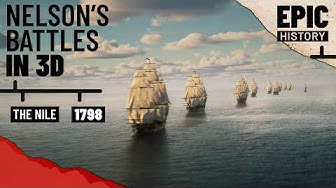
Nelson's Battles in 3D: The Nile

How Roman Soldiers Slept on Campaign

The Frigate — The Warship Pirates Feared Most

3D Guide to an 18th century Ship-of-the-Line

How Ships Hull Steel Plates Are Repaired

Inside Skuldelev 2: The Viking Warship Built in Dublin from Irish Oak (Full Process)

Battle of Trafalgar scene from the film A Bequest to the Nation.

WWII: The Rise And Fall of the Luftwaffe | Rare And Restored Archival Footage

HMS Victory in 3D: Total Guide (1/2)

The ENTIRE History of VENICE Explained | 1,000 Years of Power on Water | History Documentary

Inside the Catapult Workshop: The Machine That Broke Fortress Walls (Full Process)

The World’s Most Legendary Ships From History | Full History Hit Series

Why Medieval Villages Never Froze — Even During the Harshest Winters

Inside the Whitworth Cannon: The Confederate Sniper Gun That Killed Union Generals (Full Process)

3 Hours Of Uncensored WW2 Footage
