BOUNTY HUNTER OPTIMIZER (BHO) FOR SMART PHEV CHARGING IN RENEWABLE MICROGRIDS | MATLAB SIMULATION
DESIGN DETAILS The rapid proliferation of renewable energy resources (RERs), including photovoltaic (PV) systems and wind turbines, together with the increasing adoption of plug-in hybrid electric vehicles (PHEVs), is fundamentally reshaping conventional distribution networks into active microgrids (MGs). While these technologies significantly enhance energy sustainability and contribute to the reduction of greenhouse gas emissions, they also impose substantial operational challenges arising from the inherent stochasticity of renewable generation and the uncertainty associated with PHEV charging demand. Uncoordinated PHEV charging can lead to peak load amplification, voltage deviations, and increased power exchange with the upstream grid, thereby degrading microgrid operational efficiency and reliability. To mitigate these adverse effects, smart charging strategies that coordinate PHEV charging behavior with locally available renewable generation have attracted growing research attention. Among the various approaches, optimization-based methods are particularly effective, as they provide a systematic framework for managing multiple operational objectives and constraints under uncertain conditions. In this study, a MATLAB-based Bounty Hunter Optimizer (BHO) smart charging strategy for PHEVs in renewable-integrated microgrids is proposed. Unlike conventional fixed-power charging schemes, the proposed approach dynamically schedules PHEV charging power in coordination with renewable energy generation to minimize the net energy exchanged between the microgrid and the main grid. The BHO algorithm is adopted due to its superior balance between exploration and exploitation, adaptive group intelligence mechanism, archive-based diversity preservation capability, and strong performance in solving highly nonlinear and nonconvex optimization problems commonly encountered in modern power system operation. By incorporating elite hunting behavior, explorer search strategies, and adaptive learning mechanisms, BHO effectively avoids premature convergence while enhancing global search performance. The main contributions of this work are summarized as follows: 1. Development of a BHO-based optimization framework for coordinated PHEV charging in renewable-integrated microgrids. 2. Incorporation of stochastic PHEV behavior and network voltage constraints into the optimization formulation. 3. Application of archive-guided and adaptive hunting strategies to improve optimization robustness and solution quality. 4. Demonstration of reduced microgrid dependency on the main grid and enhanced utilization of renewable energy resources through comprehensive simulation studies. To address these challenges, the proposed MATLAB-based framework implements a smart charging power management scheme using the Bounty Hunter Optimizer, enabling optimal microgrid operation while reducing reliance on the upstream grid. By prioritizing locally generated renewable energy for PHEV charging, the interconnection power flow with the main grid is significantly reduced. Furthermore, PHEV batteries effectively function as distributed energy storage systems, alleviating the adverse impacts of high renewable penetration on the distribution network. As renewable generation is increasingly utilized to satisfy PHEV charging demand, microgrid self-sufficiency, operational flexibility, and resilience are substantially enhanced. To evaluate the effectiveness of the proposed approach, two operating scenarios are investigated. In the first scenario, PHEVs are charged without any optimization, representing an uncoordinated charging strategy with no consideration of reducing microgrid dependency on the main grid. In this case, three RER units with a lagging power factor of 0.9 are installed at buses 13, 24, and 30. In the second scenario, PHEV charging is optimally coordinated using the proposed BHO-based smart charging strategy to maximize renewable energy utilization while maintaining the same RER configuration. REFERENCES Reference Paper-1: A Charging Strategy for PHEVs Based on Maximum Employment of Renewable Energy Resources in Microgrid. Author’s Name: Ehsan Fouladi, Hamid Reza Baghaee, Mehdi Bagheri and G. B. Gharehpetian Source: IEEE Year:2019 Request source code for academic purpose, fill REQUEST FORM below, http://www.verilogcourseteam.com/requ... If you need Matlab p-code(encrypted files) to check the results, contact us by email to [email protected] You may also contact +91 7904568456 by WhatsApp Chat, for paid services. We are also available on Telegram and Signal. Visit Website: http://www.verilogcourseteam.com/ Visit Our Social Media Like our Facebook Page: / verilogcourseteam Subscribe: / @verilogteam Subscribe: / verilogcourseteammatlabproject Subscribe: / verilogcourseteam


TV ART SLIDESHOW 24/7 | Vintage Floral Gallery 🌼4K Framed Art Screensaver for Living Room

Total train shutdown: GSM-R fails nationwide – Backup system fails – Cause lies with HLR?

GRAY LANGURS OPTIMIZER-OPTIMAL PI CONTROLLER-LOAD FREQUENCY CONTROL-HYBRID PV–WIND POWER SYSTEMS

How US Air Force B 52 Pilot Performed an Emergency Takeoff at Full Speed

The FULL VIDEO of Trump they didn’t want released

This is not the AI we were promised | The Royal Society

Inside the YASA YM360: Axial Flux Motor Engineering Explained

MIT Just Revealed the AI Bubble's Fatal Flaw
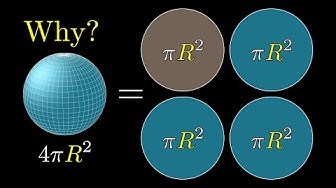
But why is a sphere's surface area four times its shadow?

Australians installed 100,000 home batteries in 17 weeks. Why can't we all do that?

How Huawei Just Built an Impossible Chip

Stop Prompting Claude. Use Karpathy's Method Instead.

Nobody Breaks Celebrities Like Rowan Atkinson

Young Men in Expensive Cars

The Hidden Time Sink in Electronics Design

17-jährige Holländerin wird BELÄCHELT.. dann SINGT sie PHANTOM DER OPER! 😮

This Johnny Depp Impression of Donald Trump Had Everyone Laughing

I Spent 20 Years Learning 3D. Then AI Happened

This Battery Doesn't Need Lithium and It Just Hit Mass Production
