Learn Multi Agent Engineering - Full Course (4+ Hours)
Build production-minded multi-agent systems with OpenAI Codex in this complete 4+ hour practical course. You’ll learn how to move from prompting to reliable agentic systems: prompt contracts, sequential and conditional workflows, parallel fan-out/fan-in, orchestration loops, checkpoints, subagents, evaluation, optimization, security, governance, and a complete capstone architecture. This course uses real Codex Desktop workflows and emphasizes evidence, reproducibility, bounded autonomy, human approval gates, safe deployment, and clear operational handoffs. What you’ll learn: • Design agent and workflow contracts with explicit goals, constraints, and done-when conditions • Build sequential, conditional, and parallel workflows without losing state or control • Orchestrate multiple specialist agents with bounded fan-out and reliable handoffs • Evaluate complete trajectories using deterministic checks and model-based judges • Diagnose failure modes, optimize the system, and add security and governance boundaries • Assemble a practical multi-agent release intelligence system in the capstone CHAPTERS 0:00 The Course Map: From Prompting to Agentic Systems Engineering 3:37 Codex Engineering Boundaries: Capability-First Agent Work 10:05 What Is an Agent? Model vs Agent vs Workflow 18:28 When Multi-Agent Is Worth It — and When It Is Overkill 24:16 The Agent Execution Loop in Codex Desktop 29:30 Prompt Contract: Goal, Context, Constraints, Done-When 33:51 A Tiny Controlled Loop: First Practical Codex Workflow 37:41 Codex Desktop as an Agentic Operating Environment 41:53 Threads, Context Windows, Compaction, and State 46:27 Plan Mode for Ambiguous Work 50:33 Goal Mode as a Long-Running Agent Loop 57:43 AGENTS.md as Durable Agent Memory 1:03:57 Sequential Workflows: A → B → C in Codex 1:09:01 Conditional Workflows: Branching on Evidence 1:17:51 Parallel Workflows: Fan-Out/Fan-In Without Chaos 1:22:11 Workflow Serialization: Make the Run Reproducible 1:26:12 Checkpointing and Resume 1:29:28 Workflow Debugging: Deadlocks, Missing Inputs, Bad Edges 1:32:18 The Orchestrator Loop: Select, Context, Run, Update, Stop 1:34:38 Termination Conditions: Budgets, Stop Text, Tests, Human Gates 1:36:27 Round-Robin as a Teaching Pattern 1:38:23 AI-Driven Orchestration: Let Codex Choose the Next Step Carefully 1:40:54 Plan-Based Orchestration and Intelligent Retry 1:43:23 Handoff Pattern: Moving Work Across Boundaries 1:45:26 Capability Discovery: Tell Users What This Workflow Can Reliably Do 1:47:07 Provenance: What Happened, Why, and With What Evidence 1:50:09 Interruptibility: Pause, Cancel, Resume, Recover 1:58:10 Dashboards for Agent State 2:08:11 Why Subagents: Parallelism, Context Isolation, and Role Specialization 2:13:29 Built-In Agents: default, worker, explorer 2:19:21 Custom Agents with Narrow Instructions 2:24:03 Bounded Fan-Out: One Agent Per Risk Lane 2:28:36 Steering, Stopping, and Closing Subagents 2:34:18 Evaluation-Driven Development for Agent Workflows 2:44:26 Trajectory Evaluation: Judge the Whole Run, Not Only the Final Answer 2:54:30 Deterministic Checks vs LLM Judges 3:04:31 The Cost of Multi-Agent Complexity 3:13:03 Ten Failure Modes of Multi-Agent Systems 3:25:03 Optimization Loop: Measure → Change → Re-Evaluate 3:35:22 When Agents Can Act: Why Security Becomes Design 3:43:31 Prompt Injection and Untrusted Context Boundaries 3:52:02 Audit Trails, Accountability, and Human Ownership 3:59:23 Responsible Deployment Checklist 4:06:43 Capstone Brief: Agentic Release Intelligence System 4:10:08 Build the Workflow Skeleton and State Model 4:12:10 Spawn Specialist Agents and Merge Evidence 4:14:04 Eval, Repair, Permissions, and Governance Pass 4:15:37 Final Dashboard, Handoff, and Architecture Review #OpenAI #Codex #MultiAgentSystems #AgenticAI


Don't learn AI Agents without Learning these Fundamentals

You’re Not Behind (Yet): How to Build Your First AI Agent (Full Guide)

The Multi-Agent Architecture That Actually Ships — Luke Alvoeiro, Factory

L8 Principal's Agentic Engineering Workflow

I Combined 3 AI Models. The Result Surprised Me (Hermes Agent MoA)

Complete Agentic AI Course - AI Agents, RAG, Embeddings, Architectures, Framework, VectorDB & Memory

How AI agents & Claude skills work (Clearly Explained)

The Best Local Agentic Coding Workflow (Complete Guide)

FORGET Loop Engineering. Agentic Engineering is about THIS

How To Think SO Clearly People Assume You're Brilliant

Full Walkthrough: Workflow for AI Coding — Matt Pocock

China quietly saved the world last month

The Riskiest Moment of the AI Bubble

This Chart Terrifies Electrical Engineers

Loop Engineering explained in 8min..
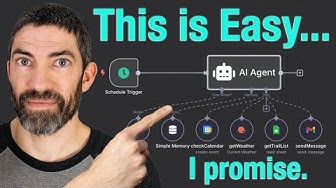
From Zero to Your First AI Agent in 25 Minutes (No Coding)

Photographers Who Became Friends With Wildlife in the Sweetest Way! 😍🐾

He Risked Everything To Warn You: No One Is Ready For What's Coming, And The AI Companies Know It!

You Can Learn AI Agent Memory System In 12 Min | Semantic & Episodic Memory, RAG, Vector Database
