How Vector Databases Actually Work — It's Not Similarity Search
A vector database is not a similarity engine — it is an approximation engine. It is allowed to be wrong, on purpose, and every design choice inside (HNSW, quantization, DiskANN, IVF cells, filtering) falls out of that one idea. This is how they really search a hundred million vectors in milliseconds. Chapters: 0:00 The magic trick — what a vector DB claims to do 1:05 Why brute force dies (and the curse of dimensionality) 3:17 The ANN bargain — recall, latency, memory 5:15 HNSW part 1 — searching is walking, not scanning 6:33 HNSW part 2 — the express layers 8:39 Recall is a dial, not a property 9:41 The memory problem — quantization & disk 11:59 Filtering — the part nobody warns you about 14:00 What real systems actually use 15:29 Where it lives — RAG and retrieve-then-rerank 16:48 The one thing to remember What you'll learn: • Why exact nearest-neighbour search cannot work at scale — and what "approximate" really buys • How HNSW turns search into a greedy walk with express lanes (and why recall is YOUR dial) • Where you actually pay — recall vs latency vs memory — and how quantization/DiskANN move that cost #systemdesign #vectordatabase #softwareengineering The Hot Path — system design, explained in depth. New videos weekly. 🔔 Subscribe: / @thehotpath #systemdesign #softwareengineering #distributedsystems


The Strange Math That Predicts (Almost) Anything

Distributed Transactions Explained: 2 Phase Commit vs Saga Pattern

RAG Is Not Vector Search — How Retrieval Actually Works

Load Balancing: You're Not Spreading Requests (You're Spreading Load)

Why AI Tokens are so Expensive - Computerphile

Google & AWS Veteran: What Top Tier Software Architects Do Differently

Android 17 sucks. So I put Linux on a phone.

Why One Number Means Nothing: How Embeddings Actually Work

At Our Son's New House Party, My Wife Whispered, "We Have To Go"—What She Said... | Calm Dad Stories

Violence Expert: Real Self-Defense Is TERRIFYING

Why Inference is hard..

Alle lachten über die 120-Kilo-Braut – bis ihre wahre Identität bekannt wurde.

21 Yr Old Disproves 4 Decades Old Belief in Computing

Software Architecture's Biggest Enemy (Not What You Think)

The Real Reason European Cars Can't Compete

2026 Relaxing Piano & Birdsong 🕊️ Calm Mind, Deep Sleep, Stress Relief & Peaceful Nature Ambience

AI Bubble: The data center oversupply crisis is coming | Ed Zitron
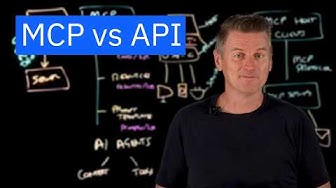
MCP vs API: Simplifying AI Agent Integration with External Data

Don't learn AI Agents without Learning these Fundamentals
