Wie ein kleiner Junge den Bombenangriff auf Heilbronn 1944 überlebte
On December 4, 1944, Heilbronn experienced the darkest day in its history. Exactly 75 years ago today, less than five months before the end of World War II, the city, which had grown over centuries, was completely destroyed. Between 7:18 p.m. and 7:55 p.m., 282 Lancaster aircraft of the British Air Force dropped 1,200 tons of bombs on the city center and the Böckingen train station area. So-called Christmas trees marked the target, then debris bombs swirled up the roofs. Accelerants ultimately ignited a firestorm that flattened everything. In the beautiful historic old town, no building survived. More than 6,500 people lost their lives – the exact number is still unknown. "By evening, I was already in bed. My mother came into my room, told me to get dressed quickly and go to the basement because planes were coming and the sirens were wailing. Father stood on the balcony and said: Today it starts, they've planted Christmas trees." There were nine people in the basement on Lixstraße. Shortly afterward, there were massive explosions. They were getting closer and closer. Suddenly, the air raid shelter door was torn off. We were in an old sandstone vault, which was also used to store wine. This cellar was under a barn with a stable, where goats and a mule were housed. A bomb must have exploded next to the stable. The animals screamed pitifully – and burned to death. Our father had recently been discharged for health reasons and was quite weakened by three years in Russia. He dipped a straw sack from a bunk into a tub filled with water and, together with a Polish prisoner of war, held it against the missing basement window. This prevented fewer toxic gases from entering the Basement. Suddenly, there was a huge explosion very close to us. The lights went out. They put a gas mask on me, like everyone else. The steel cellar door glowed red and began to melt. Through the melted door, you could see the burning phosphorus running down the stairs like lava. We were, of course, incredibly scared and began to pray. Everyone prayed, even the atheists. We weren't allowed outside even after more than half an hour because our father warned against late bloomers. After a good three hours, we finally climbed out through the small cellar window. There were fires everywhere, the air was filled with smoke. It was eerie. Soon, our house was completely burned down. We then walked down Lerchenstrasse; in some places, the asphalt was burning. Our family rushed to a classmate's house on Ludwig-Pfau-Strasse, where we were warmly welcomed. We all had to spit because we suffered from smoke inhalation. The next morning, we went to the alley where our parents had a They were looking for a good friend. There were 40 to 50 dead bodies lying in the median strip. My brother and I were immediately kept away from the area. Later, we ended up in labor service barracks at Trappensee. The air raids continued, and we sought shelter in the railway tunnel to Weinsberg."


Die Bombardierung von Dresden: Mythos und Wahrheit | Terra X

The Fate of Hermann Göring’s Family After the Fall of Nazi Germany

War der Bombenkrieg gegen Deutschland ein Kriegsverbrechen? | Zweiter Weltkrieg | Terra X

Deutschland von oben 1945 – 5 Städte | Terra X

Inside the Luftwaffe's Ju 88 Bomber: Rare 1939 German Training Film (Restored HD) | Footage Farm Ltd

Gedenkfeier zur Zerstörung der Stadt Heilbronn am 4. Dezember 1944

Newly Discovered Colour Film (1939): Luftwaffe Fighter Wing JG 77 & Bf 109 Operations

Russian Analysts in Panic - "This Keeps Getting Worse"
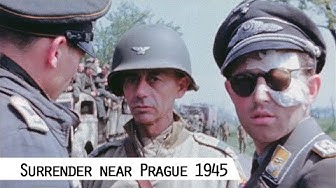
German Wehrmacht driving in to surrender near Prague (1945)

Potsdam 1945 (in color and HD)

WW2 Luftwaffe Ace Flies RAF Spitfire For the First Time

"Our State Border" — East German Film (1979)

June 6, 1944, D-Day, Operation Overlord | Colorized WW2

Demjansk 1942 – Als Stalin 100.000 Deutsche Verhungern Lassen Wollte

"Die ganze Stadt ein Flammenmeer" | Heilbronner Zeitzeuge berichtet

New clues to the lost Nazi treasure: The last contemporary witness reports

What the Nazis did to captured Soviet women soldiers - HDG #64

Hitler's dream of Berlin, and what became of it

Hitler's Baby Division: Fanatical Child Soldiers in World War II
