Che Fine Hanno Fatto i 20 Milioni di Tank e Armi Naziste dopo la Seconda Guerra Mondiale?
At the end of World War II in 1945, Europe was covered in a gigantic mass of abandoned armaments. Millions of German army rifles, pistols, machine guns, tanks, aircraft, and ammunition remained scattered across destroyed cities, forests, factories, and former battlefields. The collapse of the Third Reich was so rapid that many German units simply abandoned their equipment when fleeing or surrendering. From massive Panther and Tiger tanks to Karabiner 98k rifles and anti-aircraft guns, the entire continent was filled with Nazi military remnants, representing both an immediate danger and a huge technological bounty for the victorious powers. Much of the German weaponry was captured by the United States, the Soviet Union, the United Kingdom, and France for study, reuse, or destruction. The Allies were surprised by some of Germany's technological advances, especially in missiles, submarines, aviation, and heavy weaponry. Many tanks and vehicles were sent to military testing centers, where engineers analyzed their armor, engines, and combat systems. At the same time, thousands of small arms were reused by other countries' armies or handed over to armed movements and new postwar governments. However, not all of the Nazi arsenal disappeared quickly. For decades, enormous quantities of munitions and explosives remained buried beneath cities, lakes, and former battlefields. Unexploded bombs from the war are still found today in Germany and other European countries during construction or excavation work. Some tanks were melted down for scrap metal to rebuild European industry, while others ended up on display in military museums around the world. A massive black market also existed where German weapons were sold clandestinely, eventually reappearing in subsequent conflicts across the globe. The disappearance of the gigantic Nazi arsenal symbolized the end of one of the greatest war machines in modern history. What had once been used to conquer Europe ended up as rusting heaps, museum pieces, or remnants buried underground. Nonetheless, many technologies developed by Germany during the war profoundly influenced Cold War military design. V-2 rockets, advances in jet aviation, and certain armor concepts served as the basis for new generations of weapons in the United States and the Soviet Union, demonstrating that even after Germany's defeat, some of that machinery continued to influence the world for decades.


Solothurn 20mm Anti-Tank Rifle vs Husafell Stone (400 Pounds !!!)

Inside the T-34-85

Carro armato M4 Sherman contro Panther.

Old Rusty Pistol Restoration - Gun Restoration

TUTTO il Regno di Hitler ANNO dopo ANNO dal 1933 al 1945 | DOCUMENTARIO

1943: LA BATTAGLIA DI KURSK. IL PIÙ GRANDE SCONTRO DI MEZZI CORAZZATI DELLA 2° GUERRA MONDIALE.
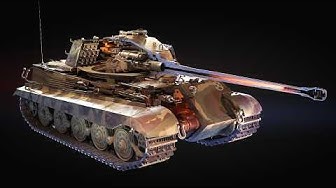
Inside the King Tiger

Dentro un M4 Sherman: com’è davvero la vita nell’abitacolo

What’s the Point of Armoured Cars?

Esercito Italiano - Le 10 Armi Più Potenti Prodotte dall'Italia!

La Battaglia di leningrado 1° e 2° P

The HORRORS of German Tank Destroyer Crews

Large Russian Motorcycle Squads Enter Ukraine - 5 Minutes Later, GONE!

La Verità Oscura Sul Fucile Di Precisione Barrett .50 Cal

Was Geschah mit Hitlers Persönlichem Piloten nach dem Zweiten Weltkrieg?

Europa: Aufrüsten für den Frieden? | Doku HD | ARTE

Cosa è successo ai 10 MILIONI di soldati tedeschi quando FINÌ la Seconda Guerra Mondiale?

Er machte die GANZE Luftfahrt zum Schrott: Die Me.262 "Schwalbe"

Mosca 1941: La verità nascosta sui carri armati abbandonati dalla Wehrmacht.
