Build Your AWS Network on Purpose — IPAM, VPC Pools, and Subnet Design That Scales
In this build session, we took a step back and planned our entire IP address space using AWS IPAM. Most people jump straight into creating a VPC, then end up with overlapping CIDRs, painful peering, and no clean way to scale across regions or accounts. We'll walk through a hierarchical IPAM design from RFC1918 all the way down to subnet-level pools, then use that plan to provision a 10.0.0.0/16 VPC with properly sized public and private subnets across multiple AZs. 🧱 What We're Building ➜ AWS IPAM with a multi-tier pool hierarchy ➜ Root pool from RFC1918 (10.0.0.0/8) ➜ Regional pools for us-west-2, ca-central-1, eu-west-1, and a reserved pool (/10 each) ➜ Environment pools: prod (/11), nonprod (/12), shared (/13), reserved (/13) ➜ Client VPC pools sized at /16 for predictable per-tenant allocation ➜ Subnet pools: private-workload (/17), public-workload (/19), private-endpoint (/19), reserved (/18) ➜ A 10.0.0.0/16 VPC carved out of the prod pool with public and private subnets across 3 AZs 🔍 What We Covered ✅ Why IP planning before VPC creation prevents painful re-architectures later ✅ Splitting the root by region so each region owns a distinct /10 ✅ Separating prod, nonprod, shared, and reserved environments under each region ✅ Sizing client VPCs at /16 for consistent per-tenant capacity ✅ Allocating subnet pools by workload type: private workload, public workload, private endpoints, and reserved ✅ Provisioning a 10.0.0.0/16 VPC with 3 public and 3 private subnets across AZs ✅ Pulling all CIDRs from IPAM instead of hardcoding them ✅ Reserving address space for future regions, accounts, and acquisitions ✅ Avoiding CIDR overlap that breaks VPC peering, Transit Gateway, and on-prem connectivity 🧩 Why This Matters ➜ IPAM turns IP space into a managed resource instead of a spreadsheet ➜ A clear hierarchy (root → region → environment → VPC → subnet) scales across accounts ➜ Sizing decisions made once at the pool level thus preventing overlap ➜ Reserved pools give you room for new regions and acquisitions without re-IPing ➜ Subnet pools by workload type make least-privilege routing and SG design easier — Build with Brainyl


How to Build a Private AWS Architecture Using Interface Endpoints (No Internet, No NAT)

Cybersecurity Architecture: Networks

Transformers, the tech behind LLMs | Deep Learning Chapter 5

The FULL VIDEO of Trump they didn’t want released

Detect and Mitigate AWS Risks in 60 Seconds

Zero-Downtime Deployments on ECS Fargate with Native Blue/Green

NestJS Full Course for Beginners in 2026 | Build a Production-Ready API
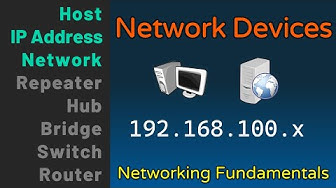
Network Devices - Hosts, IP Addresses, Networks - Networking Fundamentals - Lesson 1a

Every Networking Concept Explained In 20 Minutes

I Hacked This Temu Router. What I Found Should Be Illegal.

Building the PERFECT Linux PC with Linus Torvalds

Run Multiple Containers with ECS Fargate Task: Ghost CMS + Webhook Receiver with ECR on AWS

A Scientist's View of War

Networking Concepts Every DevOps Engineer Must Know

But what is the Fourier Transform? A visual introduction.

Automate ECS Blue/Green Deployments with GitHub Actions and OIDC

How to Actually Build Mobile Apps with AI in 2026 | A Complete Beginner's Tutorial

Model Context Protocol (MCP) Explained for Beginners: AI Flight Booking Demo!

System Design Concepts Course and Interview Prep
![Kubernetes Tutorial for Beginners [FULL COURSE in 4 Hours]](https://i.ytimg.com/vi/X48VuDVv0do/hqdefault.jpg?sqp=-oaymwEjCNACELwBSFryq4qpAxUIARUAAAAAGAElAADIQj0AgKJDeAE=&rs=AOn4CLDNg7nINwKqigXGqrL80FN9YuTNGg)