0462: Amplificatore in classe D - ep.10 Driver IR2110 in PWM sinusoidale
$2 for any color: https://jlcpcb.com/ (Up to $20 shipping discount on first order) Support me on Patreon: / pieraisa Arduino NANO CH340 Clone Driver: http://mylothehack.altervista.org/ope... Arduino Sources: http://mylothehack.altervista.org/ope... Episode 1 Class D Amplifier: • 0444: Amplificatore in classe D Teoria e s... Episode 2 Class D Amplifier: • 0445: Amplificatore in classe D - ep.2 - P... Episode 3 Class D Amplifier: • 0446: Amplificatore in classe D - ep.3 - Test Episode 4 Class D Amplifier: • 0448: Amplificatore in classe D - ep.4 - M... or Episode 5 Class D Amplifier: • 0450: Amplificatore in classe D - ep.5 - T... or Episode 6 EasyEDA Schematic • 0451: Tutorial EASYEDA inserimento schema ... or Episode 7 EasyEDA PCB https://www.youtube.com/watch?v=VOFFf... or Episode 8 Prototype Assembly: • 0455: Amplificatore in classe D - ep.8 - M... or Class A Amplifier with 1 Tube: • 0352: Amplificatore in classe A con 1 valvola or Class A Amplifier with 3 Transistors: • 0332: Amplificatore con un transistor in c... o Class AB amplifier with 1 transistor: • 0336: Amplificatore in classe B e AB con 3... o Amplifiers with 1 OPAMP: • 0344: Amplificatori con 1 OPAMP o Forum: http://mylothehack.altervista.org/forum/ o Website: http://mylothehack.altervista.org/ o Complete Video List and Sources: http://mylothehack.altervista.org/ope... The saga begun in video #444 on the basic class-D amplifier continues. In this video, I solve the problem of non-compliance with dead times for driving MOSFETs by adjusting the collector resistors of the PNP transistors upstream of the IR2110 driver. I increase the MOSFET drive gate resistance from 47 ohms to 100 ohms, thus producing a spike-free square waveform. I modify the Arduino source code to generate two push-pull PWM signals output from Arduino pins D5 and D6. I replace the output coil with a 1.5mH coil. This way, I can effectively filter the Arduino's 31,250Hz switching frequency, leaving a rectified and inverted sinusoidal output signal.


0461: Amplificatore in classe D - ep.9 - Interfaccia Arduino NANO

NE LX513 amplifier repair 🎵

Class D amplifiers

Inside a 3000W Water-Cooled Power Supply (with GaN & SiC)

0640: New Electronics LX1650 MOSFET Amplifier Repair (Part 1)

Everything You Need to Know about MOSFETs

CLASS D Amplifier - Repair and Analysis - PART 1

🔧 Accuphase P-600 Repair | Final Replacement ⚡ + Custom PCB Display Modification 🛠️

0620: Riparazione amplificatore in classe D 350W per diffusore

The 1.25V Trick That Gives You Any Voltage You Want

The Cascode Amplifier

⚡ 100W RMS for €20? Affordable Amplifier Test and Analysis

0466: Ultrasonic Parametric Speaker con Amplificatore in classe D

Unbelievable Workers | Working with Talented Engineers #46 #fail #adamrose #smartworkers

Story time - and building one of my own PCBs (minor rant)

Unbelievable Smart Workers | Genius Construction Skills, Crazy Fails | Part 114 #construction #smart

Revealing The SPECIAL TECHNIQUE Of A Pakistani Man To EXTRACT GOLD From Used Motherboard Waste
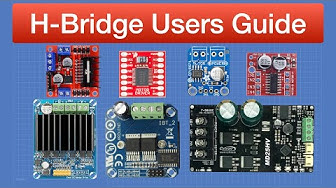
Driving DC Motors with Microcontrollers

0444: Amplificatore in classe D Teoria e simulazione ep. 1
