【脊髄小脳変性症】立ち上がる時にひざ下が揺れてしまう・2つの問題を解決する自主トレ・高橋さんのご質問No1
Today, I received a comment from Mr. Takahashi, who suffers from spinocerebellar degeneration: "When I practice standing up, my legs shake and I can't stand up." I'd like to discuss this and consider two possible causes and some self-training methods. As the name suggests, spinocerebellar degeneration is a disease that causes damage to the cerebellum, resulting in ataxia. Spinocerebellar degeneration is a brain disease that gradually worsens and makes it difficult to move, but it is not a life-threatening condition. Spinocerebellar degeneration is also highly compatible with rehabilitation, and evidence has been provided by the Ministry of Health, Labour and Welfare. Identifying the underlying causes of ataxia and continuing rehabilitation to maintain motor function can hopefully halt the decline in physical activity. It may be difficult to halt the progression of brain degeneration itself. However, the cerebellum possesses a vast number of neural circuits, most of which are said to be unused. Because we only use a small portion of the cerebellar functions in our daily lives, some research suggests that even if degeneration progresses and the number of unusable cells increases, the remaining neurons have the ability to learn. Today, I'd like to narrow down the two underlying issues behind the "swaying of the lower legs and inability to stand" symptom associated with spinocerebellar degeneration and suggest some self-training strategies for each. Problem 1: Brain-related/coordination issues → Self-Training 1: Stance Problem 2: Muscle stiffness/length issues Misuse can change muscle position → Self-Training 2: Stretching Before implementing the self-training strategies above, there are two things to keep in mind. The first is the flexor digitorum longus and flexor hallucis longus muscles in the calf. These muscles are connected to the fingers, so stiffness can be troublesome. When weight is applied, the foot rolls outward, resulting in a so-called "inversion" and the toes being bent tightly. If these muscles are properly stretched, the toes can be spread apart, allowing the foot to stand flat and prevent wobbling. The second is Takahashi's stance. It's just my guess, but I think that when you stand up or sit down, your feet don't touch the ground flat, and your heels lift up, causing you to stand on your toes. I think the reason you stand on your toes is because there's poor coordination between the tibialis anterior muscle near the shin and the calf muscles. This lack of coordination is due to a problem originating in the brain. This is the issue I pointed out in "Problem 1: Brain-related coordination problems." In order to achieve coordination, the muscles in the lower trunk need to work in advance. This is called "anticipatory postural adjustments (APAs)." When you try to stand up, the cerebellum's role is to prepare the muscles so that your entire body can adjust its position toward your feet, but if the cerebellum isn't functioning properly, the "posture" that precedes the movement isn't formed. In contrast, the problem pointed out in "Problem 2: Muscle Stiffness and Length" is a problem with the muscles (not the brain). This occurs when a certain degree of coordination from the brain is maintained, but the muscles are stiff or too short, resulting in a lack of coordination. The second half of the video provides self-training exercises to address each of the two issues, so please click on the chapters and try them out. People with spinocerebellar degeneration (SCD) benefit from visual compensation, so it's important to practice self-training while keeping your eyes on your feet. Like hemiplegia caused by stroke, SCD is highly individualized. Therefore, rather than simply posting short comments on YouTube, we recommend signing up for WillLab's "Online Rehabilitation" program, where we can provide more detailed and specific advice. Please consider this option if you are interested. To all the therapists watching this video, please consider whether the underlying issue behind the difficulty in movement is brain-related, or due to compensation or imbalance, and plan your rehabilitation accordingly. 1:16 When practicing standing, the knees shake and it's difficult to stand properly. 2:03 It's not a fatal disease. 2:17 It's well suited to rehabilitation. 3:31 Two problems: Which one? 6:10 Anticipatory Postural Adjustments (APAs) 7:10 Independent Training Comparing the Two Problems 7:17 Independent Training 1: Stance: Raise your hips at the same time as you place your hands on the ground. 9:09 Independent Training 2: Push down on your patella and straighten your knee. 11:11 It's better to compensate with your eyes: Look closely at your feet. 12:00 Consider whether the problem is brain-related or due to muscle compensation. ------------------------------------------------ ■Rehabilitation Studio WillLabo A private rehabilitation facility located in Ryogoku. Our experienced therapists, w...

![[Why can't hemiplegic people move? Paralyzed upper limb ④] We'll talk about the recovery of the f...](https://i.ytimg.com/vi/-Cz38Zjne6Y/hqdefault.jpg?sqp=-oaymwEjCNACELwBSFryq4qpAxUIARUAAAAAGAElAADIQj0AgKJDeAE=&rs=AOn4CLDHhr-iFQLpSYmQ_3ncNDzVBvXhiw)
[Why can't hemiplegic people move? Paralyzed upper limb ④] We'll talk about the recovery of the f...

なぜ日本人は英語が聞き取れないのかワシが解説したる!

【最強のメンタル】大谷翔平、山本由伸…1流アスリートのメンタルの鍛え方/偽りのポジティブ思考をやめろ/スラムダンクで1番メンタルが強いのは?/非認知脳を活性化せよ/柴田阿弥×辻秀一【ビジネス虎の巻】

脊髄小脳変性症の方の歩行を考える 2「足より先に身体なんだよね!」
![[Special Feature | Fighting an Incurable Neurological Disease] The ray of hope and the bond betwe...](https://i.ytimg.com/vi/pvV2i38LZLc/hqdefault.jpg?sqp=-oaymwEjCNACELwBSFryq4qpAxUIARUAAAAAGAElAADIQj0AgKJDeAE=&rs=AOn4CLAzOojN9D4xFRCRDTYpNBglkklFlg)
[Special Feature | Fighting an Incurable Neurological Disease] The ray of hope and the bond betwe...

正しいリハビリの進め方 / 狭窄症・側弯症について

難病の「脊髄小脳変性症」 自分で食べられなくても“料理で人を笑顔に”
![[Understanding hemiplegia caused by stroke] Reasons why the affected upper limb cannot move ① Not...](https://i.ytimg.com/vi/5pEXepiOwHo/hqdefault.jpg?sqp=-oaymwEjCNACELwBSFryq4qpAxUIARUAAAAAGAElAADIQj0AgKJDeAE=&rs=AOn4CLAL3m9wqTK0LXSWK_C4fV57VMUaIA)
[Understanding hemiplegia caused by stroke] Reasons why the affected upper limb cannot move ① Not...
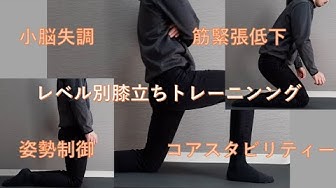
See and understand! Cerebellar Ataxia Rehabilitation - Leveled Kneeling Training to Improve Muscl...

難病・脊髄小脳変性症と闘う 芦屋のアーティスト
![[Understanding hemiplegia caused by stroke] Exercises for hemiplegic people with paralyzed hands ...](https://i.ytimg.com/vi/b1x8xukOAyo/hqdefault.jpg?sqp=-oaymwEjCNACELwBSFryq4qpAxUIARUAAAAAGAElAADIQj0AgKJDeAE=&rs=AOn4CLDiOuslRz605cD2wJ5Of-uYsB9W4g)
[Understanding hemiplegia caused by stroke] Exercises for hemiplegic people with paralyzed hands ...

一人の樵夫が山で置き去りにされた母娘を拾って妻にし…そして一夜にして信じられないほどの大富豪になった | 民話 | 歴史解説
![[Self-training goals for the paralyzed upper limb] ① Step by Step - Brain function that hinders l...](https://i.ytimg.com/vi/vpqnvUAPG1c/hqdefault.jpg?sqp=-oaymwEjCNACELwBSFryq4qpAxUIARUAAAAAGAElAADIQj0AgKJDeAE=&rs=AOn4CLDAoPkGLSIW3JBKdkaCCHuibr_Yig)
[Self-training goals for the paralyzed upper limb] ① Step by Step - Brain function that hinders l...

神経内科専門医が解説!脊髄小脳変性症・多系統萎縮症(神経難病を知ろう!シリーズ5)
![[A thorough understanding of stroke and its aftereffects of hemiplegia ⑮] "I feel like I want to ...](https://i.ytimg.com/vi/wppzacOlS-c/hqdefault.jpg?sqp=-oaymwEjCNACELwBSFryq4qpAxUIARUAAAAAGAElAADIQj0AgKJDeAE=&rs=AOn4CLCfRf6JCtUOcvp8oMU4QKowSmUETQ)
[A thorough understanding of stroke and its aftereffects of hemiplegia ⑮] "I feel like I want to ...

脳卒中後の麻痺手の自主練習

This Happens When You Do 25 Push-Ups Twice A Day

【神経難病と闘う家族】脊髄小脳変性症の一種「DRPLA」苦悩そして希望の光は… アディショナルJにいがた~ニュースのウラバナシ~

お薬を2ヶ月飲んでみた結果…脊髄小脳変性症 (SCD) 【伊藤しゅん】 #松山市議会#松山市議会議員
